
“Gold is doing what gold does best — acting as a barometer of uncertainty.” — James Wilson, CEO of Alchemy Resources, on how global economic and geopolitical uncertainty continues to push investors toward gold.
Gold and silver prices in Australia in 2026 have started on a strong note. In just the first few weeks of January, prices have moved higher, catching the attention of investors and Australians in Brisbane. Many people are asking what is driving this rise and how long it will continue.
The simple answer is uncertainty. Around the world, there are still concerns about inflation, high government debt, global tensions, and the general direction of the economy. When confidence in financial markets is shaky, people want to invest in assets that have held their value over long periods. Gold and silver have, for aeons, been safe-haven assets for good reasons.
Why Gold Is Gaining Attention
The gold price in Australia in 2026 has risen steadily to start the year. One of the main reasons is ongoing demand from central banks. Many countries continue to increase their gold reserves as a way of reducing reliance on paper currencies. When large institutions buy gold and hold it long term, it helps support the overall market.
Investors are also buying physical gold in Australia as a form of protection. With share markets trading at high levels and inflation still a concern, gold is often seen as a way to balance risk within a portfolio.
Gold tends to move in a more stable, measured way than silver, which is why many people view it as a long-term store of value rather than a short-term trade.
Silver’s Extra Push from Industry
Silver has risen even faster than gold so far this year. Why? Like gold, people invest in silver in Australia or buy silver bullion in Australia for safety. However, silver is also widely used in industry. It is found in solar panels, electric vehicles, electronics and other modern technologies. As renewable energy and advanced technology continue to expand, demand for silver increases.
This combination of investment demand and industrial use is pushing silver prices up more quickly. At the same time, it also means silver can be more volatile. It tends to experience larger price swings, both up and down.
Are Prices Too High?
Prices for both gold bullion bars in Australia and silver bullion coins have risen quickly, naturally raising the question of whether they have gone too far, too fast.
When the price of an asset rises very quickly in a short time, it can sometimes drop a little afterwards. This is normal and happens in most markets. Prices rarely move up in a straight line all the time. Even if the long-term outlook still looks strong, small ups and downs along the way are a normal part of how markets behave.
For this reason, anyone considering buying precious metals should take a steady, considered approach rather than rushing in all at once.
What Is Supporting the Long-Term Outlook?
Despite short-term volatility, several longer-term factors continue to support gold and silver. Mining has become more complex and expensive, limiting the rate at which new supply can enter the market. Central banks remain active buyers of gold. Industrial demand for silver continues to grow, particularly in renewable energy and electronics. Inflation and currency concerns have not disappeared, which keeps interest in physical assets alive.
These broader trends suggest that gold and silver still have a role to play in uncertain economic times.
Gold Price Forecast for 2026
Gold ended December 2025 at around A$4,301 per ounce, up from a low of A$1,800 per ounce earlier in the year. For 2026, most forecasts suggest gold will continue to rise, although at a steadier pace. The average AI projections place gold somewhere between roughly A$4,700 and A$5,400 by December 2026. Some of the more optimistic forecasts suggest prices could briefly reach above A$6,000 during the year, while more conservative predictions see gold just crossing the A$5,000 level towards the end of 2026.
Bullion investors surveyed at the end of 2025 are also confident. As a group, they expect gold to average around A$5,136 per ounce in December 2026. Professional analysts are slightly more cautious, with average forecasts closer to A$4,742.
What stands out is that most forecasts agree on one point. They expect gold to remain above $5,000 at some stage in 2026, assuming global uncertainty continues.
Silver Price Forecast for 2026
Silver tends to move more sharply than gold because it has both investment demand and industrial demand. Its use in solar panels, electric vehicles, and electronics continues to grow. That gives it strong upside potential, but it also means prices can be more volatile.
Silver had an even stronger year in 2025, finishing December with an average price above $63 per ounce after peaking much higher during the year. For 2026, predictions vary more widely than gold. Most AI forecasts suggest silver could trade between A$53 and A$75 by December 2026. Some projections see the metal testing the high A$70s during the year.
Private investors are the most bullish on silver. Many believe it could reach A$80 per ounce by the end of 2026, with an average forecast of A$80.
Gold vs Silver Performance in 2026
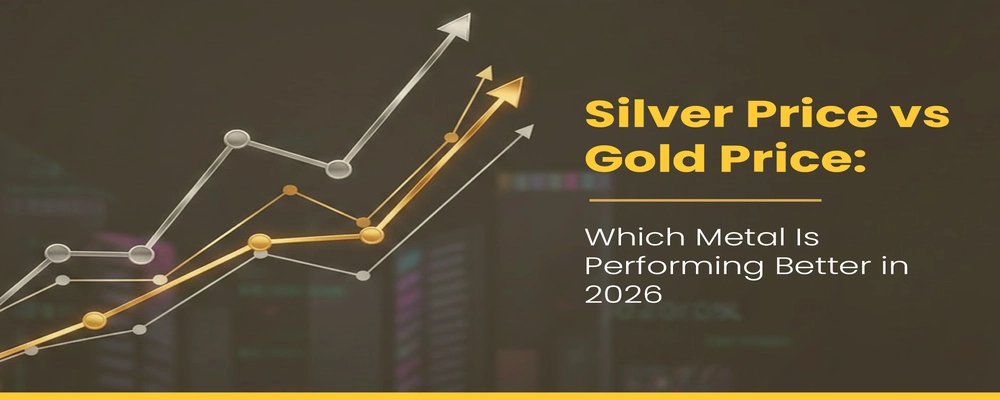
Here’s a quick comparison between gold and silver price forecasts, projected gain, market demand, volatility level, and more.
|
Metric |
Gold |
Silver |
|
End of 2025 Price |
~A$4,301 per oz |
~A$63 per oz |
|
2026 Forecast Range |
A$4,700 – A$5,400 |
A$53 – A$75 |
|
Midpoint Projection |
~A$5,050 |
~$64 |
|
Projected % Gain (Midpoint) |
~17% |
~2% |
|
Bullish Forecast Potential |
A$6,000+ |
A$80 |
|
Main Demand Driver |
Central banks + investors |
Investors + strong industrial demand |
|
Volatility Level |
Moderate |
High |
|
Typical Investor Type |
Long-term wealth protection |
Growth-oriented, higher risk tolerance |
|
Key 2026 Risk Factor |
Slowing inflation, stabilising economy |
Industrial slowdown, demand shifts |
What Could Influence Prices in 2026?
Investors surveyed at the end of 2025 believe the biggest drivers for 2026 will likely include:
-
Geopolitical tensions: When there are conflicts between countries, trade disputes, or political instability worldwide, financial markets often become uncertain. In times like this, gold and silver have historically been seen as safe-haven metals, so demand often rises when global tensions increase.
-
Government spending: When governments increase spending significantly, it can sometimes lead to concerns about rising national debt or long-term inflation. When people worry about the value of paper currencies in the future, they often turn to gold and silver as a way to protect their wealth.
-
Monetary policy and interest rates: When interest rates are high, investors sometimes prefer interest-earning assets like savings accounts or bonds. But when rates fall or are expected to fall, gold and silver can become more attractive because their value often moves independently of traditional financial products.
-
Inflation trends: Inflation simply means the rising cost of everyday goods and services. When inflation stays high for a long period, people often look for ways to protect the buying power of their money. Precious metals like gold have long been seen as a store of value, which is why demand often increases when inflation concerns grow.
-
Currency movements: Gold and silver are traded globally, usually in US dollars. When currencies weaken against the dollar, the price of precious metals can rise in local markets. For Australian investors, movements in the Australian dollar can influence how expensive or affordable gold and silver appear locally.
If global uncertainty remains elevated, precious metals could continue to attract strong demand. On the other hand, if economic conditions stabilise and inflation cools significantly, price momentum may slow.
What This Means for Australians
Right now, most forecasts for 2026 are positive for gold, silver, platinum and palladium. Many experts believe gold could stay strong and even move above $5,000. Silver may keep doing well if demand from industries such as solar and electronics remains high.
That said, no one can predict the market perfectly. We saw that in 2025, when prices rose much more than many experts expected. Things can change quickly, and markets do not always follow forecasts.
For people who buy gold or silver in Australia or buy other precious metals, this could mean an opportunity. If prices continue to rise, the value of what you are holding may increase. And if prices jump sharply, it might be a good time to consider selling while the market is strong.
Buying Gold and Silver from Cash Your Gold
At Cash Your Gold, we keep a close eye on live market prices every day. If you have jewellery, bullion, coins, or scrap precious metals, we can give you a clear, honest valuation based on the live gold prices in Australia and/or live silver prices in Australia.
Our gold or silver buying process is straightforward. Our team explains the current market price, the available bullion options, and the total cost before you make a decision. Because pricing is linked to live gold prices in Australia and live silver prices in Australia, you can be confident that the rates reflect the real market value on the day.
To talk to our experts,
📞 Call: 1300 678 175
Visit
1. Chermside (North Brisbane)
-
Address: Suite 5, 832 Gympie Rd, Chermside, QLD 4032
-
Phone: 07 49 390 234
-
Email: info@cashyourgold.net.au
-
Hours: Mon–Fri: 9:00 AM – 5:00 PM; Sat: 10:00 AM – 4:00 PM
-
Details: Located opposite Westfield Chermside, with parking available behind the building and easy access via Hamilton Road.
2. Sunnybank (South Brisbane)
-
Address: 6/409 Mains Rd, Macgregor, QLD 4109
-
Phone: 07 2142 6862
-
Email: info@cashyourgold.net.au
-
Hours: Mon–Fri: 9:00 AM – 5:00 PM; Sat: 10:00 AM – 4:00 PM
-
Details: Conveniently located in the heart of Sunnybank, easily accessible for residents.
3. Brownsplains (South-West Brisbane)
-
Address: Unit 3/3376 Mount Lindesay Hwy, Regents Park, QLD 4118
-
Phone: 07 2142 6482
-
Email: info@cashyourgold.net.au
-
Hours: Mon–Fri: 9:00 AM – 5:00 PM; Sat: 10:00 AM – 4:00 PM
Details: Situated along the Mount Lindesay Highway, this location serves the south-western suburbs of Brisbane.
